Every patient that enters our clinic has a unique story, but few have captured our hearts quite like Pippin.
Who's Pippin?
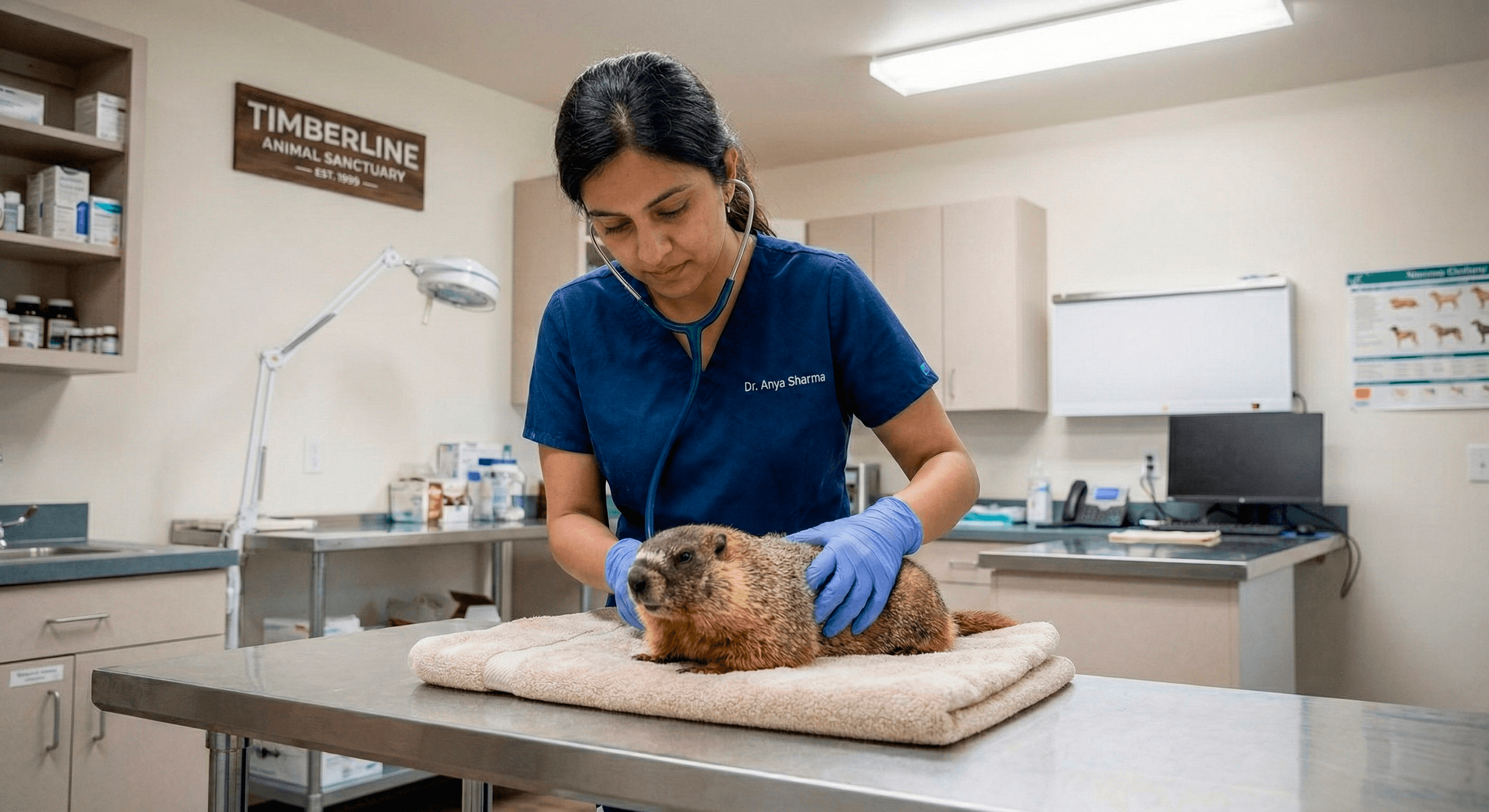
Pippin is a yellow-bellied marmot who was found orphaned and dehydrated near a hiking trail. Without the protection of a colony or his mother, his chances of survival in the wild were nearly zero. When he arrived at our facility, our medical team immediately began a specialized treatment plan to get him back on his feet.
What Makes a Marmot Unique?
Marmots are fascinating members of the squirrel family. Understanding their biology is key to providing them with the expert medical care they need. Here are a few facts about these "whistle pigs" of the high country:
True Hibernators: Marmots spend up to eight months of the year in deep sleep. This means they must gain significant weight during the summer to survive the winter.
Social Structures: They live in family groups called colonies. For an orphan like Pippin, missing out on early social cues can make a return to the wild more complex.
Vocal Sentinels: They use high-pitched whistles to warn their colony of predators like hawks or foxes.
The Rehabilitation Process
Pippin’s recovery involved more than just medicine. To ensure a successful release, our team followed a strict protocol to prevent him from becoming too comfortable around humans.
Medical Stabilization: We treated Pippin for dehydration and provided a nutrient-dense diet to mimic the alpine vegetation he would find in the wild.
Limited Interaction: Our staff wore gloves and kept noise to a minimum. It is vital that wild animals maintain their natural fear of people for their own safety.
Physical Conditioning: Once he was healthy, Pippin was moved to an outdoor enclosure. This allowed him to practice burrowing and foraging in a controlled environment.
A Look Toward the Future
The ultimate goal for Pippin is a return to the mountains. By providing expert care during his most vulnerable months, we are giving him the "second chance" he deserves. Supporting native wildlife is a community effort, and your awareness helps keep these animals safe in their natural habitats.
Did You Know? If you find a wild animal you suspect is injured or orphaned, it is always best to call a professional sanctuary before attempting to move it.